PaddleOCR
Understanding the PP-OCR pipeline and its efficiency benchmarks.
Theory & Benchmarks
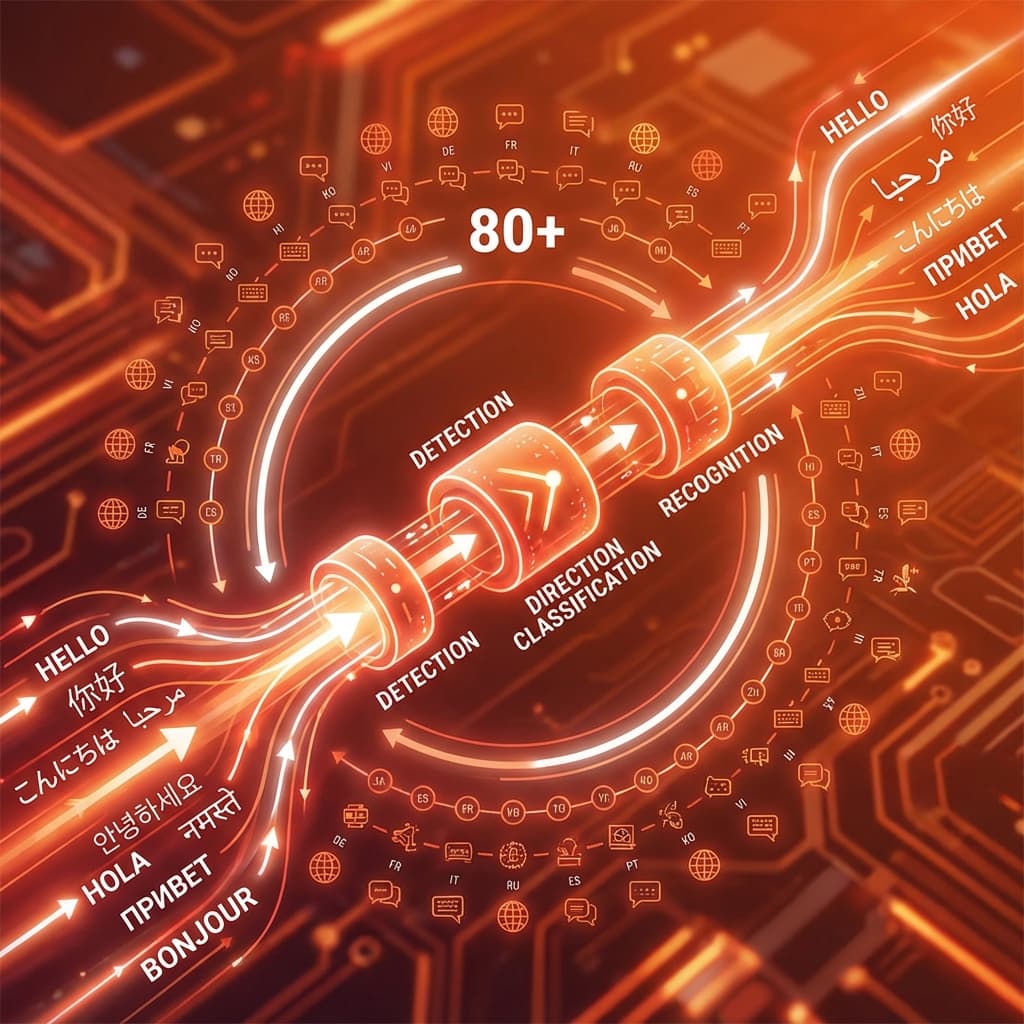
PaddleOCR is renowned for its efficiency and "ultra-lightweight" design, making it suitable for both server and mobile deployments.
Architecture: The PP-OCR Pipeline
PaddleOCR typically employs a three-step pipeline:
- Text Detection: Uses models like DBNet (Differentiable Binarization) to locate text boxes.
- Direction Classification: Detects text orientation (0, 90, 180, 270 degrees) to ensure correct reading.
- Text Recognition: Uses models like CRNN (Connectionist Temporal Classification) or SVTR (Scene Text Recognition with ViT).
The recent PP-OCRv4 version introduces significant improvements in recognition accuracy for rare characters and symbols.
Benchmark Results
PaddleOCR is optimized for speed without sacrificing significant accuracy.
| Model Version | Inference Time (CPU) | Precision |
|---|---|---|
| PP-OCRv3 Mobile | ~120ms / page | 91.2% |
| PP-OCRv3 Server | ~350ms / page | 94.5% |
| PP-OCRv4 Server | ~400ms / page | 96.1% |
Comparison
PaddleOCR stands out in its support for over 80+ languages, making it the most versatile choice for international document processing.